X
Our staff will contact you within 12 hours, You can also contact us through the following ways:
Contact US WhatsApp: +8618766656705
- Email: [email protected]
- Tel: +8618766656705
- Web: https://www.toponechain.com/
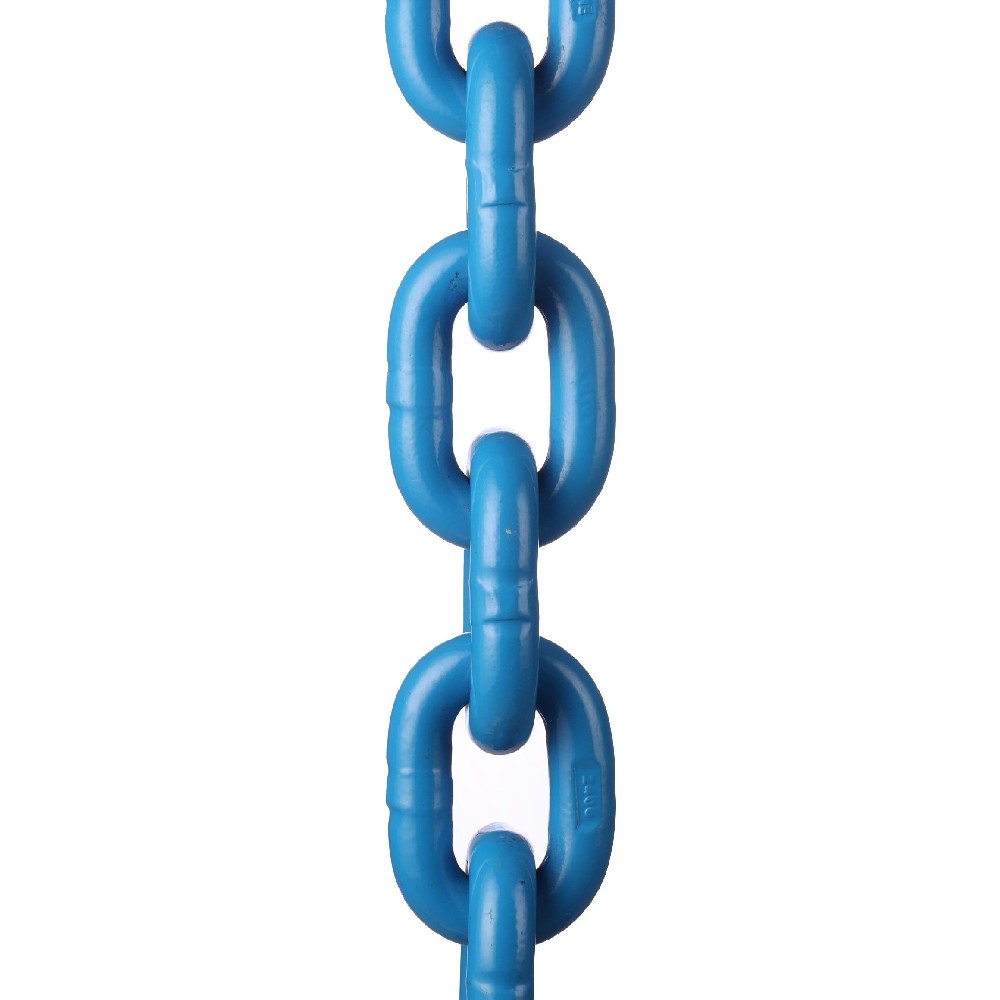
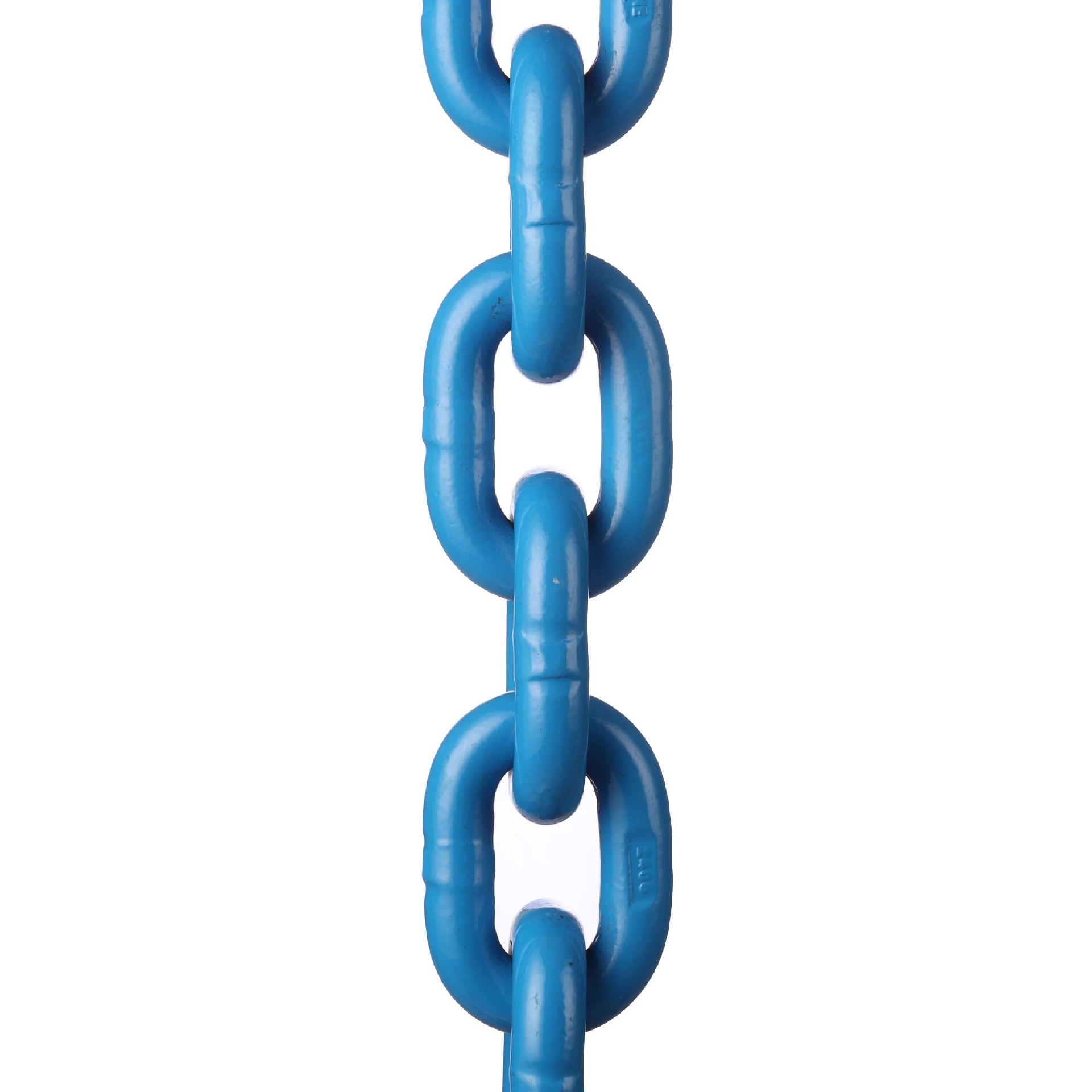
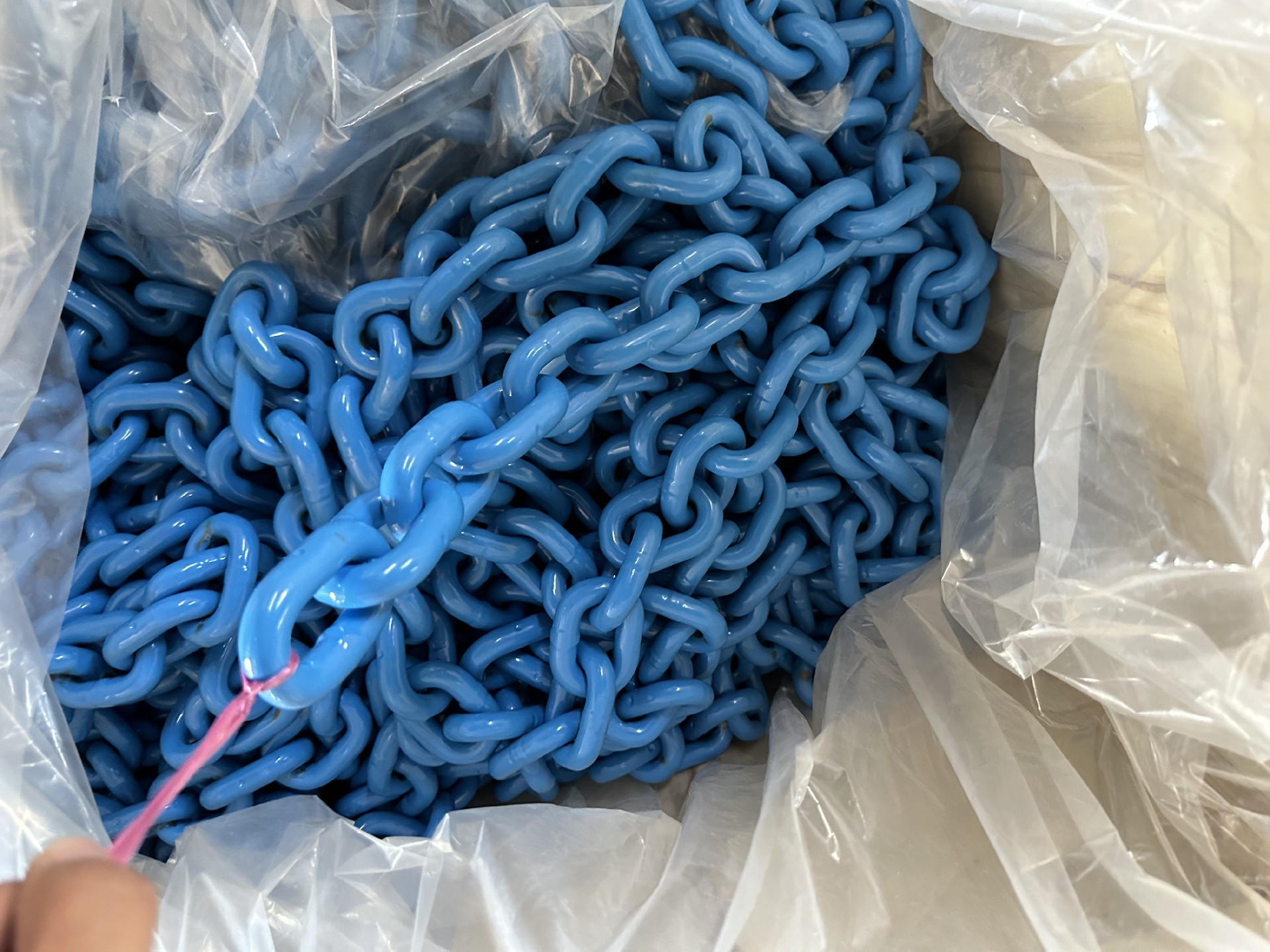


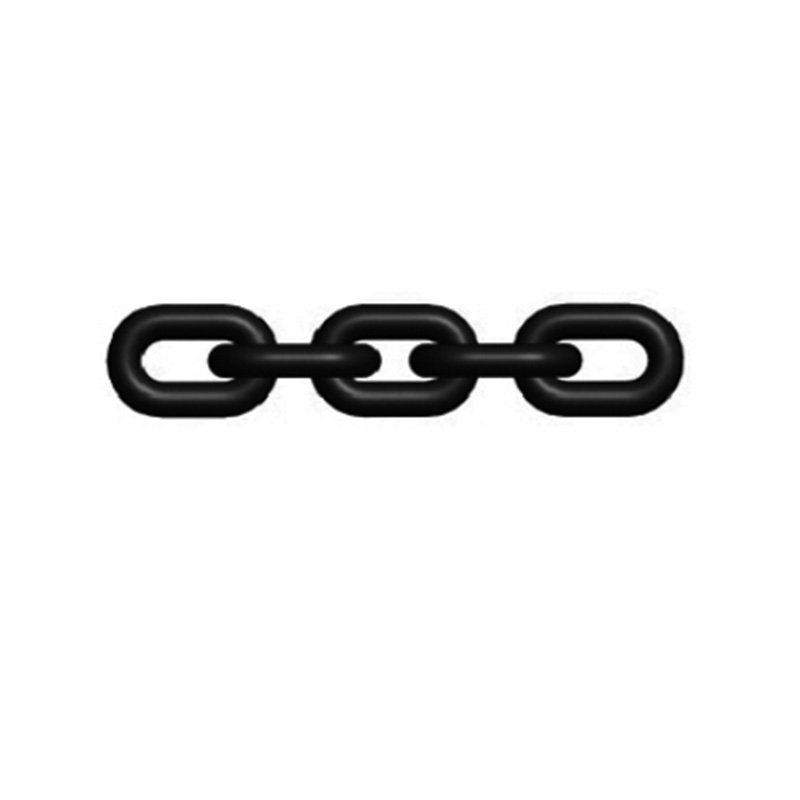
The G100 chain, commonly used for lifting and handling cargo operations, has a lifting capacity 25% higher than the G80. Manufactured in quenched and tempered alloy steel with high resistance to impact and wear to meet the key requirements of "short link AS 2321,
EN818-2 Grade 100 Lifting Chain is manufactured from quenched and tempered high-quality alloy steel for overhead lifting applications. The heat treatment process improves tensile strength and fatigue resistance during repeated lifting cycles. Compared with Grade 80 lifting chains, Grade 100 chains provide approximately 25% higher Working Load Limit under the same nominal diameter, allowing users to achieve higher lifting capacity without increasing chain size.
The chain is designed for use in:
Chain sling assemblies
Crane lifting systems
Offshore lifting operations
Industrial rigging
Heavy equipment handling
Construction lifting applications
Grade 100 Lifting Chain is manufactured according to EN818-2 short link chain requirements. The short link design improves load distribution and maintains stable engagement with lifting components during overhead lifting operations.
The calibrated structure controls:
Link pitch consistency
Internal width tolerance
Dimensional accuracy
Compared with long link chains, short link lifting chains provide improved load stability and reduce abnormal movement during lifting operations.
One of the main advantages of Grade 100 Lifting Chain is its increased lifting capacity. Under the same chain diameter, Grade 100 chains provide approximately 25% higher Working Load Limits than Grade 80 chains.
For lifting operations, this means:
Higher lifting capacity without increasing chain size
Reduced sling weight for equivalent lifting loads
Improved handling efficiency during rigging operations
Greater flexibility in equipment selection
This performance improvement allows many lifting assemblies to use smaller diameter chains while maintaining required Working Load Limits.
The chain is produced through controlled quenching and tempering processes. This heat treatment improves the mechanical properties of the alloy steel and helps maintain stable performance during cyclic loading conditions.
During operation, lifting chains continuously experience:
Tensile loading
Dynamic shock loading
Repeated fatigue cycles
Abrasive contact between links
Heat-treated alloy steel improves resistance to wear and impact compared with untreated carbon steel chains used in general industrial applications.
Grade 100 Lifting Chain is available with multiple surface finishes according to operating environment requirements.
Available surface treatments include:
Self color
Polishing
Blackened
Painted
Plastic coating
Electro galvanized
Hot-dip galvanized
Hot-dip galvanized coatings improve corrosion resistance during offshore, marine, and outdoor applications. Electro galvanized finishes provide a uniform zinc coating for moderate corrosion environments. Blackened finishes are commonly used for indoor lifting systems where lubricant retention is important.
Each Grade 100 chain is marked for identification and traceability purposes.
Typical markings include:
Grade 100 identification
Manufacturer identification
Production batch information
Traceability markings support inspection procedures, maintenance records, and quality management requirements throughout the service life of the chain.
EN818-2 Grade 100 Lifting Chain is suitable for use with Grade 100 lifting components including:
Master links
Connecting links
Shortening clutches
Sling hooks
Multi-leg chain slings
All lifting components within the assembly should match the Grade 100 system to ensure the Working Load Limit of the complete sling assembly is maintained according to EN818 standards.
Grade 100 Lifting Chain is designed with a minimum safety factor of 4:1 for overhead lifting applications. Manufacturing, testing, and inspection procedures verify compliance with lifting chain requirements before shipment.
Each production batch commonly undergoes:
Proof load testing
Breaking force testing
Hardness inspection
Weld inspection
Dimensional verification
These inspections help ensure conformity with EN818-2 requirements for industrial lifting operations.
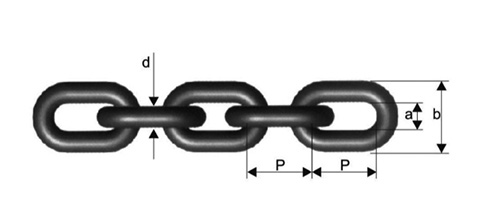
Size (mm) | Inside min. a | outside max. b | W.L.L (ton) | Test Load (KN) | Min. Breaking Load (KN) | Weight (kg/m) |
6x18 | 7.5 | 21 | 1.4 | 35.3 | 56.5 | 0.79 |
7.1x21 | 9 | 24.5 | 2 | 49.5 | 79.1 | 1.1 |
8x24 | 10 | 28 | 2.5 | 62.8 | 101 | 1.4 |
9x27 | 11 | 30.6 | 3.2 | 79.5 | 127 | 1.8 |
10x30 | 12.5 | 35 | 4 | 98.1 | 157 | 2.2 |
11.2x34 | 14.5 | 37.5 | 4.8 | 119 | 1 90 | 2.7 |
12x36 | 15 | 42 | 5.8 | 141 | 226 | 3.1 |
13x39 | 16.3 | 46 | 6.8 | 1 66 | 265 | 3.8 |
14x42 | 18 | 49 | 7.9 | 193 | 308 | 4.4 |
16x48 | 20 | 56 | 10 | 251 | 402 | 5.7 |
18x54 | 23.7 | 63.2 | 13 | 318 | 509 | 7.3 |
20x60 | 25 | 70 | 16 | 393 | 628 | 9 |
22x66 | 28 | 77 | 19 | 475 | 760 | 10.9 |
Manufactured according to EN818-2 Grade 100 short link lifting chain standards using quenched and tempered alloy steel for overhead lifting applications.
Each batch passes proof load testing, breaking force testing, weld inspection, hardness testing, and dimensional verification according to EN818-2 requirements.
Suitable for chain slings, crane lifting, offshore rigging, heavy industrial handling, and overhead lifting operations.
Inspect regularly for elongation, cracks, corrosion, deformation, and abnormal wear. Remove damaged chains from lifting service immediately.